

Order of authors of a scientific paper signals the level of contribution each author made to the paper. If you are first author in the order of authors, it can be very prestigious. The further down you go in the order of authors, the less prestige. This is why it is not uncommon for scientific author groups to devolve into heated arguments over authorship order – usually after the manuscript is written.
The saying, “Good fences make good neighbors” means that having clearly marked boundaries can lead to better relationships. So as long as you are direct and honest (while also being polite and diplomatic), you can prevent many of these disagreements before they happen.

Order of Authors: Tips for Determining Order
Academic papers have been written on how to determine order of authorship, but I have some simple rules I follow that I will lay out here.
- The first author should be whoever’s idea the paper or study was that the paper is reporting about – even if they didn’t do a lot of the writing on the paper. It was their idea, so they should get credit for it. Often, this is the principal investigator of the study, but it doesn’t have to be.
- If there is a statistical analysis included in the paper, and the analyst is not already the first author, they should be second author.
- If the first author had someone else write the main first draft, that person should then be the third author.
- Anyone who actually wrote parts of the paper who are not in the author list yet should come next.
- Finally, anyone who edited the paper, reviewed the paper to give feedback, or contributed references to be cited in the paper should come after that.
- Anyone who did not contribute to the paper should not be an author. If you feel someone deserves some credit but they did not actually contribute to the paper, thank them in the acknowledgement section of the paper for what they actually did (e.g., helping with institutional agreements, doing data collection, technical support, etc.).
Figuring Out the Order of Authors, and Writing it Down
Before I actually write a paper, I get together a writing group including anyone planning to write on the paper or do any analysis included in the paper. We make a plan about who will write the first draft, and then send it around for editing. Since this usually happens in an online meeting, at that point, I share my screen, open a Word document, and start writing down what we are planning. Have you ever heard about setting up a written “authorship agreement” before actually writing the paper? It’s a good idea, and this is one way to do it.
It is at this point I also ask everyone to decide on the authorship order, and write it down for everyone to see. We also make a list of journals were are planning to target, as well as any other decisions we make about the paper. This is also a good time to talk about how you will split any authorship fees, and whether or not your team wants to pay for open access publishing. (I encourage everyone to publish open access if possible, because it increases the rate of your paper being cited by others.)
I have often run into the problem where one of the authors wants to add an author who literally has nothing to do with the paper or the study we are writing about. They all have personal reasons for this – the person is the leader of their lab, or a former professor, or a friend who did them a favor, etc. If a person wants to list themselves as an author on a paper they literally had nothing to do with, they are a grifter, and you don’t want to be involved with them.

Never share authorship with someone who is known to be a grifter, or anyone with a reputation for plagiarism, scientific misconduct, or other types of professional misbehavior. You do not want to put your reputation at stake by being in the same author list as them. If your co-author continues to push to add a grifter, just bow out of the writing team. It isn’t worth it to continue, because publishing papers is a long, drawn-out process of going back and forth with the reviewers, and if you have a grifter author and another author defending them, dealing with all this is not worth the headache.
As a side note, many journals ask you to report what role each author played in developing the manuscript as part of manuscript submission. This is by way of the Contributor Role Taxonomy (CRediT), which was established just for this purpose. There are 14 official author roles, and authors can serve more than one role. I encourage you to read the CRediT web page and become familiar with the different roles.
Adding Authors: Do’s and Don’ts
Sometimes, after we write the draft, we realize we are missing some expertise. It is at that time we can invite other authors to read the paper, give us feedback we will incorporate, and share in our authorship. To make this change, it is a good idea to have a meeting of the existing authors, during which you can open up the existing “authorship agreement” you have written and add to it.
All the authorship changes should happen before you submit the paper to the journal. This is because once you submit it, you are not really allowed to change authors or rearrange the order of authorship. Journals get really freaked out if you do this, and you have to beg them to let you.
Most journals explain in their “instructions to authors” that basically say you are not allowed to change authorship after you submit the paper. However, if your reviewers give you a lot of crap about your manuscript, and you think adding an author who can provide you professional guidance will help you solve their issues, it isn’t a bad idea. As an example, I have seen author teams who botch their statistics add a statistician author after getting a lot of crap from reviewers. While adding an author after the fact is better than just struggling through the mountain of criticism you are getting without the expertise to address it, it’s best to know your limits and figure out your team has a deficit before you submit the manuscript – not after you get piled on by reviewers.
What About the “Corresponding Author”?
Any of the authors can be the “corresponding author” – it doesn’t matter where they fall on the authorship list. It’s best to choose a corresponding author who has a lot of strong technical expertise when dealing with the online journal submission portals. This person should be ready and willing to serve as an interface between the author group and the journal editor and reviewers. They should be willing to make an account on the journal submission portal, upload all the files necessary, and fill in all the required information.
If there is someone on your authorship list who is very good at reading the “instructions for authors” and making sure the manuscript format meets the requirements, that person will likely make an optimal corresponding author. This person will be the first to hear when there is progress on the review of your paper, and should coordinate putting together the response to reviewers and the manuscript edits. They don’t have to do them, they just have to coordinate the group to ensure the work gets done and resubmitted on time.
Is there any advantage to being corresponding author? More recently, I’ve heard that academics can get points toward tenure for serving as corresponding author. Also, the corresponding author’s e-mail is usually listed as a contact on published articles, so this can elevate their status. Also, they are more likely to be suggested by other authors as a potential reviewer.

More Tips on Order of Authors
An ideal maximum for the number of authors, in my opinion, is five. Some bigger projects may legitimately include more than five authors, because they all did some work on the project. But honestly, this is rare. On a normal paper, seven should be the absolute maximum acceptable. Otherwise, it will look like you are just padding the authorship with friends who did not really contribute to the paper, and that’s a bad look.
I understand that some institutions reward authors for publishing single-authored papers. Usually, this is in the form of a point system, where points are shared across authors, so having a single-authored paper gains you the most points. Nevertheless, single-authored papers are a terrible idea. First, no one is perfect. You need the other authors to try to catch weaknesses, flaws, or holes in your paper and patch them up before they get to the reviewers.
Secondly, reviewers also are not perfect. If there are weaknesses, flaws or holes in your paper that get past reviewers, and the paper gets published, you might turn into a target. You could be attacked in letters to the editor of the journal and on social media. This can happen even if you are not publishing a single-authored paper – but in that case, you have a whole team working together to defend your work. If it’s you alone, you are left to defend yourself.
I would never allow myself to be in that position. It’s better to have at least one co-author on every paper, and share the points. You can make up for it by writing more papers, which is better for your career anyway.
Read all of our data science blog posts!

Order of Authors on a Scientific Paper: Shoot Straight and Don’t Fight
Order of authors on a scientific paper can be challenging and cause disagreements. My blog [...]
Nov
Scaling Rates for Public Health Communication: Why You Should Do it, and How
Scaling rates in public health is important if you want to communicate clearly with your [...]
Oct

Choosing a Journal for Your Scientific Manuscript: Tips, Tricks, and Considerations
Choosing a journal for your scientific manuscript needs to be strategic, or your publication will [...]
Oct

Problems with PRISMA: Why it Sucks, and What You Should Do About It
Problems with PRISMA? You’re not the only one. The PRISMA framework does not work well [...]
Oct

Prevent Research Misconduct, and Avoid the Drama
Prevent research misconduct, and the consequences and drama that goes with it. Use some simple, [...]
Oct
Mixed Methods Research: The Hot New Trend in Graduate School
Mixed methods research is trending now, with doctoral students and academics being pressured to do [...]
Oct
AI or Statistics – Which Modeling Approach Should You Use?
AI or statistics – two different, interrelated approaches you can use in your scientific publication. [...]
Sep
Confidence Intervals are for Estimating a Range for the True Population-level Measure
Confidence intervals (CIs) help you get a solid estimate for the true population measure. Read [...]
1 Comment
Jun
Continuous Variable? You Can Categorize it!
Continuous variable categorized can open up a world of possibilities for analysis. Read about it [...]
2 Comments
Jun
Delete if the Row Meets Criteria? Do it in SAS!
Delete if rows meet a certain criteria is a common approach to paring down a [...]
May
Chi-square Test: Insight from Using Microsoft Excel
Chi-square test is hard to grasp – but doing it in Microsoft Excel can give [...]
May
Identify Elements of Research in Scientific Literature
Identify elements in research reports, and you’ll be able to understand them much more easily. [...]
May
Design the Most Useful Time Periods for Your Conversions
Time periods are important when creating a time series visualization that actually speaks to you! [...]
Apr
Apply Weights? It’s Easy in R with the Survey Package!
Apply weights to get weighted proportions and counts! Read my blog post to learn how [...]
Nov
Make Categorical Variable Out of Continuous Variable
Make categorical variables by cutting up continuous ones. But where to put the boundaries? Get [...]
Nov
Remove Rows in R with the Subset Command
Remove rows by criteria is a common ETL operation – and my blog post shows [...]
Oct

CDC Wonder for Studying Vaccine Adverse Events: The Shameful State of US Open Government Data
CDC Wonder is an online query portal that serves as a gateway to many government [...]
Jun

AI Careers: Riding the Bubble
AI careers are not easy to navigate. Read my blog post for foolproof advice for [...]
Jun

Descriptive Analysis of Black Friday Death Count Database: Creative Classification
Descriptive analysis of Black Friday Death Count Database provides an example of how creative classification [...]
Nov
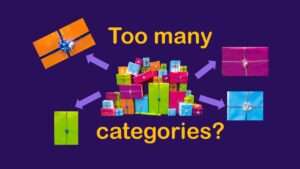
Classification Crosswalks: Strategies in Data Transformation
Classification crosswalks are easy to make, and can help you reduce cardinality in categorical variables, [...]
Nov

FAERS Data: Getting Creative with an Adverse Event Surveillance Dashboard
FAERS data are like any post-market surveillance pharmacy data – notoriously messy. But if you [...]
4 Comments
Nov
Dataset Source Documentation: Necessary for Data Science Projects with Multiple Data Sources
Dataset source documentation is good to keep when you are doing an analysis with data [...]
Nov

Joins in Base R: Alternative to SQL-like dplyr
Joins in base R must be executed properly or you will lose data. Read my [...]
Nov

NHANES Data: Pitfalls, Pranks, Possibilities, and Practical Advice
NHANES data piqued your interest? It’s not all sunshine and roses. Read my blog post [...]
Nov

Color in Visualizations: Using it to its Full Communicative Advantage
Color in visualizations of data curation and other data science documentation can be used to [...]
Oct

Defaults in PowerPoint: Setting Them Up for Data Visualizations
Defaults in PowerPoint are set up for slides – not data visualizations. Read my blog [...]
Oct
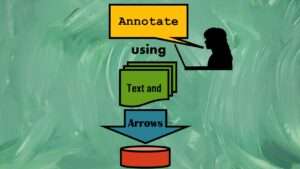
Text and Arrows in Dataviz Can Greatly Improve Understanding
Text and arrows in dataviz, if used wisely, can help your audience understand something very [...]
Oct
Shapes and Images in Dataviz: Making Choices for Optimal Communication
Shapes and images in dataviz, if chosen wisely, can greatly enhance the communicative value of [...]
Oct

Table Editing in R is Easy! Here Are a Few Tricks…
Table editing in R is easier than in SAS, because you can refer to columns, [...]
Aug
R for Logistic Regression: Example from Epidemiology and Biostatistics
R for logistic regression in health data analytics is a reasonable choice, if you know [...]
272 Comments
Aug

Connecting SAS to Other Applications: Different Strategies
Connecting SAS to other applications is often necessary, and there are many ways to do [...]
Jul

Portfolio Project Examples for Independent Data Science Projects
Portfolio project examples are sometimes needed for newbies in data science who are looking to [...]
Jul

Project Management Terminology for Public Health Data Scientists
Project management terminology is often used around epidemiologists, biostatisticians, and health data scientists, and it’s [...]
Jun

Rapid Application Development Public Health Style
“Rapid application development” (RAD) refers to an approach to designing and developing computer applications. In [...]
Jun

Understanding Legacy Data in a Relational World
Understanding legacy data is necessary if you want to analyze datasets that are extracted from [...]
Jun
Front-end Decisions Impact Back-end Data (and Your Data Science Experience!)
Front-end decisions are made when applications are designed. They are even made when you design [...]
Jun

Reducing Query Cost (and Making Better Use of Your Time)
Reducing query cost is especially important in SAS – but do you know how to [...]
Jun
Curated Datasets: Great for Data Science Portfolio Projects!
Curated datasets are useful to know about if you want to do a data science [...]
May
Statistics Trivia for Data Scientists
Statistics trivia for data scientists will refresh your memory from the courses you’ve taken – [...]
Apr

Management Tips for Data Scientists
Management tips for data scientists can be used by anyone – at work and in [...]
Mar
REDCap Mess: How it Got There, and How to Clean it Up
REDCap mess happens often in research shops, and it’s an analysis showstopper! Read my blog [...]
Mar

GitHub Beginners in Data Science: Here’s an Easy Way to Start!
GitHub beginners – even in data science – often feel intimidated when starting their GitHub [...]
Feb
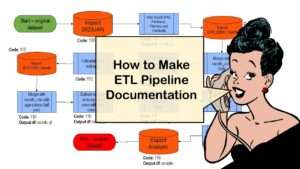
ETL Pipeline Documentation: Here are my Tips and Tricks!
ETL pipeline documentation is great for team communication as well as data stewardship! Read my [...]
Feb
Benchmarking Runtime is Different in SAS Compared to Other Programs
Benchmarking runtime is different in SAS compared to other programs, where you have to request [...]
Dec

End-to-End AI Pipelines: Can Academics Be Taught How to Do Them?
End-to-end AI pipelines are being created routinely in industry, and one complaint is that academics [...]
Nov
Referring to Columns in R by Name Rather than Number has Pros and Cons
Referring to columns in R can be done using both number and field name syntax. [...]
Oct
The Paste Command in R is Great for Labels on Plots and Reports
The paste command in R is used to concatenate strings. You can leverage the paste [...]
Oct
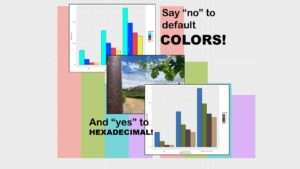
Coloring Plots in R using Hexadecimal Codes Makes Them Fabulous!
Recoloring plots in R? Want to learn how to use an image to inspire R [...]
5 Comments
Oct
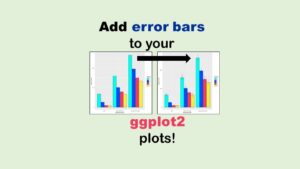
Adding Error Bars to ggplot2 Plots Can be Made Easy Through Dataframe Structure
Adding error bars to ggplot2 in R plots is easiest if you include the width [...]
Oct

AI on the Edge: What it is, and Data Storage Challenges it Poses
“AI on the edge” was a new term for me that I learned from Marc [...]
Jun

Pie Chart ggplot Style is Surprisingly Hard! Here’s How I Did it
Pie chart ggplot style is surprisingly hard to make, mainly because ggplot2 did not give [...]
5 Comments
Apr
Time Series Plots in R Using ggplot2 Are Ultimately Customizable
Time series plots in R are totally customizable using the ggplot2 package, and can come [...]
Apr

Data Curation Solution to Confusing Options in R Package UpSetR
Data curation solution that I posted recently with my blog post showing how to do [...]
Apr

Making Upset Plots with R Package UpSetR Helps Visualize Patterns of Attributes
Making upset plots with R package UpSetR is an easy way to visualize patterns of [...]
11 Comments
Apr
Making Box Plots Different Ways is Easy in R!
Making box plots in R affords you many different approaches and features. My blog post [...]
Mar
Convert CSV to RDS When Using R for Easier Data Handling
Convert CSV to RDS is what you want to do if you are working with [...]
Mar

GPower Case Example Shows How to Calculate and Document Sample Size
GPower case example shows a use-case where we needed to select an outcome measure for [...]
Feb
Querying the GHDx Database: Demonstration and Review of Application
Querying the GHDx database is challenging because of its difficult user interface, but mastering it [...]
Feb
Variable Names in SAS and R Have Different Restrictions and Rules
Variable names in SAS and R are subject to different “rules and regulations”, and these [...]
Feb
Referring to Variables in Processing Data is Different in SAS Compared to R
Referring to variables in processing is different conceptually when thinking about SAS compared to R. [...]
Jan
Counting Rows in SAS and R Use Totally Different Strategies
Counting rows in SAS and R is approached differently, because the two programs process data [...]
Jan

Native Formats in SAS and R for Data Are Different: Here’s How!
Native formats in SAS and R of data objects have different qualities – and there [...]
Jan

SAS-R Integration Example: Transform in R, Analyze in SAS!
Looking for a SAS-R integration example that uses the best of both worlds? I show [...]
Dec
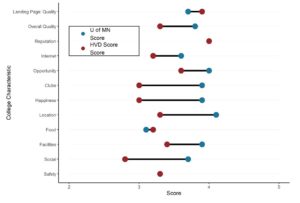
Dumbbell Plot for Comparison of Rated Items: Which is Rated More Highly – Harvard or the U of MN?
Want to compare multiple rankings on two competing items – like hotels, restaurants, or colleges? [...]
2 Comments
Sep
Data for Meta-analysis Need to be Prepared a Certain Way – Here’s How
Getting data for meta-analysis together can be challenging, so I walk you through the simple [...]
Jul

Sort Order, Formats, and Operators: A Tour of The SAS Documentation Page
Get to know three of my favorite SAS documentation pages: the one with sort order, [...]
Nov
Confused when Downloading BRFSS Data? Here is a Guide
I use the datasets from the Behavioral Risk Factor Surveillance Survey (BRFSS) to demonstrate in [...]
2 Comments
Oct
Doing Surveys? Try my R Likert Plot Data Hack!
I love the Likert package in R, and use it often to visualize data. The [...]
3 Comments
Oct
I Used the R Package EpiCurve to Make an Epidemiologic Curve. Here’s How It Turned Out.
With all this talk about “flattening the curve” of the coronavirus, I thought I would [...]
Mar
Which Independent Variables Belong in a Regression Equation? We Don’t All Agree, But Here’s What I Do.
Trying to decide what independent variables belong in a regression can be daunting. My blog [...]
Aug
Order of authors on a scientific paper can be challenging and cause disagreements. My blog post gives you tips on keeping the peace.
