
Study design courses are hard to find outside of college classes. These days, everyone benefits from knowing the basic building blocks for designing research studies, even non-scientists. For example, I’ve met a lot of business leaders and marketing experts who would love to have online study design courses at their fingertips. Although many of these people have a background in statistics, they are lacking a research methods framework to use when designing studies with the purpose of understanding what causes what. This is why I authored three study design courses you can take on LinkedIn Learning.
Designing Big Data Health Studies: Part 1 is the first course you should take if you want to get going with study design. Of all my study design courses, this one is aimed at novices who have not ever been introduced to the basics of research design.

Master the basics of study design online
Tackle hands-on challenges with real world data
Get LinkedIn Learning course certificate
Here is what it covers:

Chapter 1: Epidemiology and Causal Inference
This chapter is a great place to start in terms of study design courses, because it introduces you to basic concepts and the associated vocabulary behind the elements of study design. Learn the details about populations vs. samples, what an “exposure” and an “outcome” is, and the basics of causal inference.

Chapter 2: Study Designs
This section uses the concepts and vocabulary from the first chapter to introduce you to basic study designs popular in data science. It explains the difference between an observational study and an experiment, what descriptive and analytic studies are, the elements of cross-sectional and case-control studies.

Chapter 3: Measures of Association
In this chapter, we get into the concept of the 2 by 2 table, and how to calculate and interpret popular ratios in epidemiology, including the prevalence ratio and the odds ratio. While these calculations are relatively simple, the importance lies in how they can be interpreted for the purposes of causal inference, which is explained in this chapter.

Chapter 4: Planning a Study
This chapter guides you to use what you know about your subject domain and couples this with examples from the scientific literature to help you create your own unique research project. It also coaches data scientists on how to select an existing dataset to support their analysis.

Chapter 5: Planning the Analytic Dataset
Raw datasets need to be transformed into analytic datasets to support statistical processes. While this is challenging, having a robust study design behind this procedure helps immensely. This chapter guides you on how to plan the transformation of the raw dataset into one that will support the analysis for the study you designed.
Once you’ve completed the first course in study design, you can move on to more advanced approaches covered in Designing Big Data Health Studies: Part 2.
Build and interpret impressive regression models
Showcase the results of your analysis
Get a head start for graduate school
Chapter 1: Logistics of Creating the Analytic Dataset
In this chapter, you will receive guidance on how to develop the analytic dataset for the study you designed by applying eligibility criteria and transforming variables necessary for your analysis.
Chapter 2: Conducting the Analysis
Whether you are doing only a descriptive analysis or proceeding to a regression analysis, this chapter shows you how to execute your analytic plan and develop your research results.
Chapter 3: Interpreting the Final Model
Now you have your results – but what do they mean? This chapter guides you through practical ways to interpret and communicate about your final model.
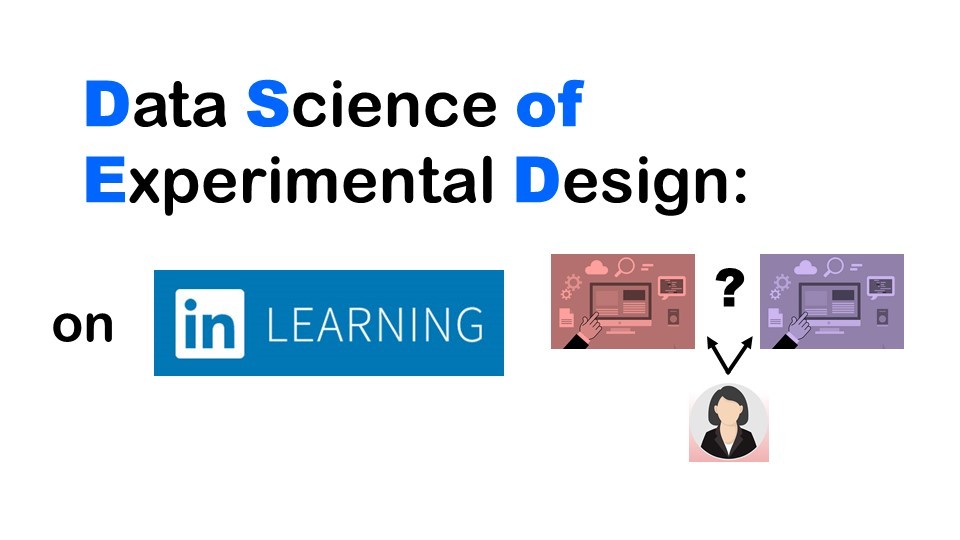
Designing Big Data Health Studies: Parts 1 and 2 show you how to perform observational studies. But what about a randomized controlled experiment, like A/B testing? This topic is covered in my third study design course on LinkedIn Learning, Data Science of Experimental Design.
Develop an A/B test that provides actionable results
Convince yourself of the optimal choice using data you collect
Avoid costly errors in A/B testing that delay decisions
Chapter 1: Introduction to Experimental Testing
In this chapter, I define the elements of experimental testing. Learn the features of an experiment, and attributes of systems and environments optimal for experimental tests.
Chapter 2: Defining Conversions
There are many ways to define a conversion, and this chapter helps you brainstorm as to the best way to characterize conversions in your experiments. Focus is put on identifying meaningful outcomes for your particular situation, and choosing compatible time periods.
Chapter 3: Defining Conversion Rates
As your new app becomes more popular, you will likely see more sales, and as traffic to your web site increases, you will likely see more web site-associated conversions, like mailing list sign-ups. To track these situations over time, rather than looking at increases in individual conversion events, it is more informing to track conversion rates. This chapter provides you the insights you need to productively define the numerators and denominators for those rates.
Chapter 4: Baseline Descriptive Analysis
Before you can improve a system like a marketing funnel, you need to better understand how it functions in its current state. This chapter helps you conduct basic descriptive analysis aimed at informing the choices you will make when designing your experiment.
Chapter 5: Designing the Experiment
By the time you reach this chapter, you are ready to design your experiment. This chapter helps you make key decisions when you design and implement your experimental test.

Chapter 6: Sample Size and Statistics
How long do you need to run your experiment so that you get “enough” data to make a decision between A or B? This chapter shows you practical approaches to answering this question.

Chapter 7: Analyzing and Interpreting Data
There is not a lot of clear guidance online as to how to run meaningful statistics on the data obtained from an A/B test that can lead to actionable insights. This chapter clarifies this issue and offers simple statistical approaches you can use to help you choose whether A or B is a more preferable condition – or whether they are essentially the same, and it does not matter given your situation.
Check out my courses and books!
Biostatistics for Dummies: The Thinking Data Scientist’s Quintessential Professional Reference
“Biostatistics for Dummies” is the thinking data scientist’s essential reference. Check out the updated 2024 [...]
Sep
Data Curation Course: Learn Data Curation Online from LinkedIn Learning!
Curation files are especially helpful for communicating about data on teams. Learn more about what [...]
Oct

Study Design Courses: Online Learning about Research Methods
Study design courses that you can access online will hand you a framework for research [...]
Sep

Learn R Online: Take it at Your Own Pace
Learn R online and tackle statistical problems easily with open source software! Take my LinkedIn [...]
2 Comments
Sep
Announcing the Publication of my New SAS Book on Data Warehousing
SAS is known for big data and data warehousing, but how do you actually design [...]
Oct

Learn SAS Online, and Expand your Career Opportunities
Learn SAS online, and extend your expertise so you can take on new projects. Take [...]
Sep
Testimonials for Monika Wahi’s Linked In Data Science Courses
Testimonials for Monika Wahi’s data science courses on LinkedIn Learning are posted here. Read what [...]
Apr
Study design courses that you can access online will hand you a framework for research design, so you can develop useful analyses that guide you toward actionable goals.
